
Oberoi Realty vs Other Branded Residences in India: Who Offers Real Value?
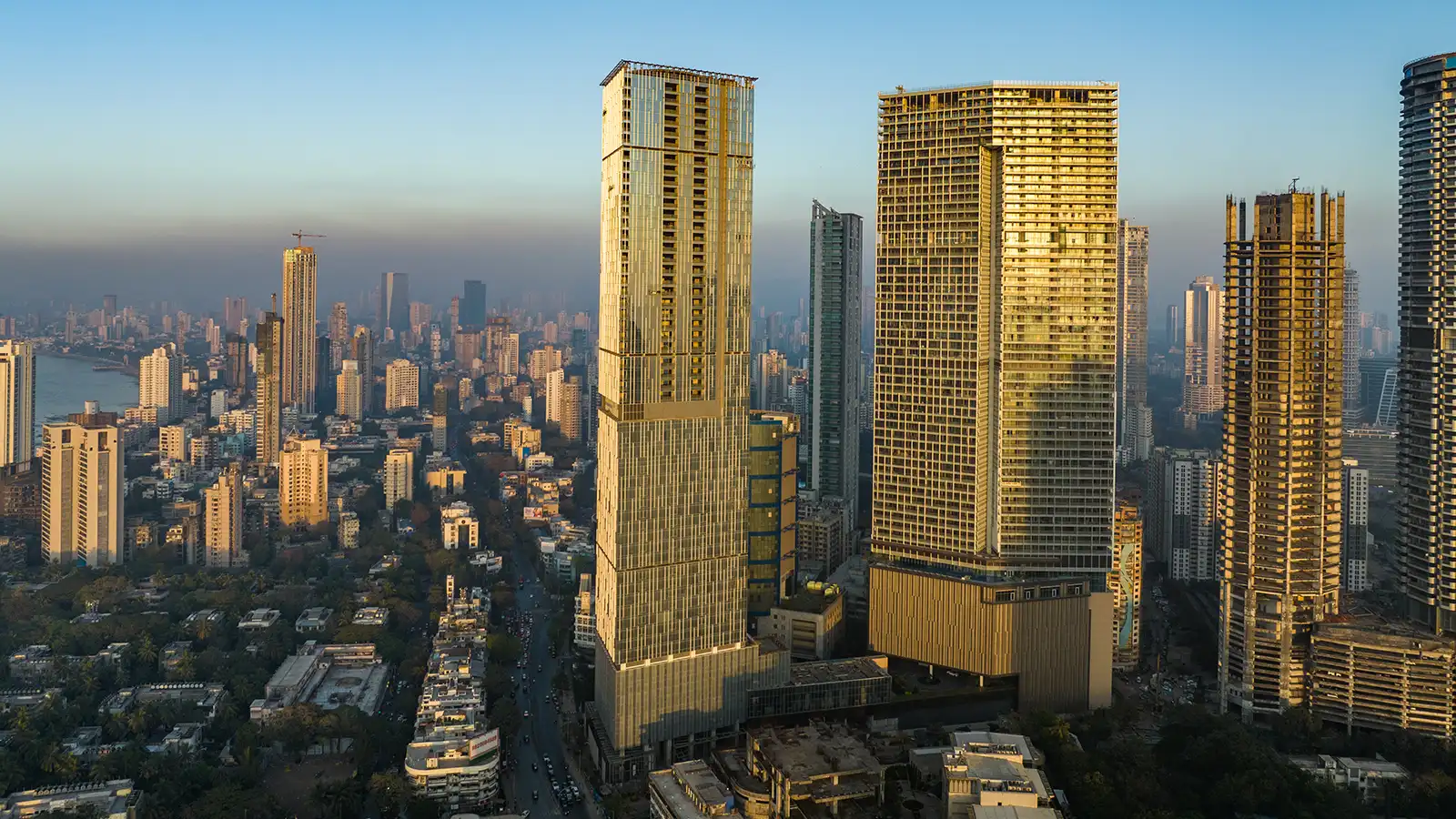
India’s luxury real estate market has changed. Developers are no longer just building expensive apartments, they are partnering with global names like Ritz-Carlton, Aman, Four Seasons, Armani, Versace, and Trump to create what the industry now calls branded residences.
The idea is simple: attach a world-class brand to a building, and buyers get more than a home, they get a standard of living backed by a name that stands for something globally.
But here is where it gets interesting. Not every branded residence works the same way. Some brands manage your building. Others just design it. Some partnerships are operational, meaning the brand is present every day after you move in. Others are purely aesthetic, the brand shaped how the interiors look, and then stepped away.
Oberoi Realty has built its entire luxury identity around one type of partnership. And understanding that is the key to understanding why this comparison matters.
What Oberoi Realty Does Differently
Oberoi Realty is a Mumbai-based real estate developer. Founded in 1980, it brings over four decades of experience in the real estate sector and has delivered more than 42 landmark residential, commercial, hospitality, and retail developments across Mumbai. While it is not the largest real estate company in India, it is among the most selective and quality-focused developers, known for creating premium residential, commercial, retail, hospitality, and mixed-use developments with a strong emphasis on design, execution, and long-term value.
The Projects That Defines Oberoi Realty
Three Sixty West
Their flagship project, Three Sixty West in Worli, has two towers. One is The Ritz-Carlton Hotel — 238 rooms, fine dining, a sea-view bar, and a spa. The other is private residences managed by Ritz-Carlton. Residents get access to the hotel’s full service stack: concierge, housekeeping, laundry, dry cleaning, and à la carte services. The building was designed by Kohn Pedersen Fox and constructed by Samsung C&T, the company that built the Burj Khalifa. Apartments start at ₹45 crore. Only 284 residences in the entire project.
The incoming Aman Residences in Worli — India’s first — works on the same principle. Aman operates roughly 30 properties globally. Their brand is built entirely on operational standards, not marketing. When Aman signs a management agreement, they are committing to run your building the way they run their hotels. That is what Oberoi secured for Worli.
Three Sixty North
Oberoi Realty is expanding beyond Mumbai for the first time with its entry into Gurgaon through Three Sixty North on Golf Course Extension Road. This project brings the same hospitality-led luxury concept seen in Mumbai’s Three Sixty West, including services like concierge, valet, and housekeeping, inspired by global hotel standards. It marks the brand’s shift into North India’s premium residential market, aiming to redefine branded living in NCR.
This is the difference. Not better marble. Not a more recognisable logo. An operator whose global reputation depends on the standard of your building every single day.
The Partnership Itself Is the Proof
Ritz-Carlton does not agree to manage a building unless the developer meets their construction standards, service infrastructure, and operational requirements. Aman — with only 30 properties in the world — does not sign a management agreement with a developer whose credibility is questionable.
The fact that Oberoi Realty secured both, in the same city, in back-to-back projects, tells you something about what those brands think of Oberoi’s quality. A fashion label licensing their name to a developer is a commercial transaction. A global hotel company agreeing to operate your building is a quality endorsement.
That validation is something no other developer in Mumbai has matched.
How Other Branded Residences in India Compare
India’s branded residence market has grown fast, and with it, the variety of brand partnerships has expanded significantly. Developers across Mumbai, Delhi-NCR, Bengaluru, and Pune have tied up with global names from hospitality, fashion, and lifestyle. But the nature of those tie-ups — what the brand actually does, and how long its involvement lasts, varies more than the marketing suggests.
Lodha Group has brought two of the most recognisable global names to Mumbai’s Worli. At Lodha World One, Armani/Casa — Giorgio Armani’s luxury interiors brand — designed every residence. The materials, the finishes, the complete visual identity of each apartment carry the Armani aesthetic. The project also brought in Six Senses for the spa and Quintessentially for concierge.
At Trump Tower Mumbai, the Trump Organization’s identity runs through the 78-storey gold-facade tower — common areas designed by Hirsch Bedner Associates, white-glove service, and residents receiving a Trump Card with access to Trump properties globally. These are genuinely impressive collaborations. But Armani/Casa is a design house, and once the building is delivered, their role is complete. The Trump Organization sets the brand standards — Lodha’s own in-house hospitality team runs the building day to day.
Panchshil Realty in Pune introduced India’s first Trump-branded residences at Trump Towers Pune in Kalyani Nagar — two 23-storey glass towers, 46 single-floor residences, interiors by Matteo Nunziati, and concierge by Quintessentially. They also brought YOO to India with YOO Pune, the design brand founded by Philippe Starck, where Starck’s design philosophy defines the entire aesthetic identity of the project.
ABIL Group went further with The Mansion on Hughes Road, South Mumbai — India’s first residence designed by Versace Home. Just 12 apartments in a 32-storey tower off Marine Drive, Donatella Versace’s creative direction present in every interior, with unobstructed views of the Arabian Sea. Across all three projects, the brand shaped how the building looks and feels at the highest possible level. Management, in each case, sits with the developer.
The one project outside Mumbai that comes closest to Oberoi’s model is Four Seasons Private Residences Bengaluru by Embassy Group — 109 residences with interiors by Yabu Pushelberg, where Four Seasons actively manages the building under a full hospitality framework. Concierge, in-residence dining, spa, and housekeeping all operate under Four Seasons’ global standards. This is a genuine operations agreement, not a licensing deal, and it is the same model Oberoi has built in Mumbai — just in a different city.
Non-hotel brand collaborations account for nearly 75% of India’s branded residence market. That means most of what is sold as “branded” in India is built on design identity, name association, and licensing — not on a hospitality operator running your building after possession. That is not a criticism. Armani-designed interiors and a Versace-shaped home are genuinely world-class products. But they answer a different question than the one Oberoi answers. The design brands define how your home looks. The hospitality operators define how your home runs — every day, indefinitely, with their global reputation on the line.
Who Offers Real Value?
The answer depends entirely on what you mean by value.
If value means a globally iconic design identity — Armani/Casa at Lodha World Towers, Versace Home at ABIL Mansion, Elie Saab at M3M’s NCR projects — these are extraordinary. The brand’s design language is present in every surface, every finish, every detail. You are living inside a piece of that brand’s world.
If value means a globally recognised name at a wider price point — Trump Tower Mumbai by Lodha at ₹6–23 crore, Trump Towers Pune by Panchshil at ₹13–20 crore — these deliver international brand association and a defined service standard at prices more buyers can reach.
If value means the most prestigious developer-built address without a hospitality tie-up — DLF on Golf Course Road, Gurugram, is the benchmark. The Dahlias at an average of ₹72 crore per unit sells on the strength of the DLF name, the golf club access, and two decades of neighbourhood-building.
But if value means a hospitality brand that is contractually responsible for how your building runs after you move in — where a global operator with a global reputation is accountable for your concierge, your maintenance, your daily living standard — then the field narrows considerably.
Oberoi Realty with Ritz-Carlton at Three Sixty West and Aman incoming at Worli. Four Seasons with Embassy Group in Bangalore. Westin with Whiteland in Gurgaon. Taj with AMPA Group in Chennai.
These are the projects where the brand partnership is an operations agreement, not just a design contract.
Oberoi has built this model most consistently and most visibly in Mumbai — India’s most expensive residential market. Every major project they have brought to ultra-luxury has a hospitality operator running the building. Not contributing to the brochure. Running the building.
That is the distinction. And in a market where every developer uses the word branded, that distinction is worth understanding before you spend ₹30 crore on a home.
Conclusion
India’s branded residence market has no shortage of impressive names. Armani, Versace, Trump, Four Seasons, every developer has found a global brand to attach to their building.
But branded means different things depending on who is using the word. For most developers, it means a global name shaped the building. For Oberoi Realty, it means a global operator runs it, every day, after possession, with their international reputation on the line.
That is the distinction that makes Oberoi’s model stand apart. And in a market where every developer uses the word branded, it is the one worth understanding before you spend money on a home.